
The End of One-Size-Fits-All Health: Your Body, Your Data, Your Rules
Remember when “being healthy” meant following the same generic advice as everyone else? Drink eight glasses of water. Get 10,000 steps. Sleep eight hours. For years, we chased these population-wide averages, often left wondering why the results were so mixed. What if the secret to better health wasn’t found in universal rules, but in the unique, intricate story of your own body?
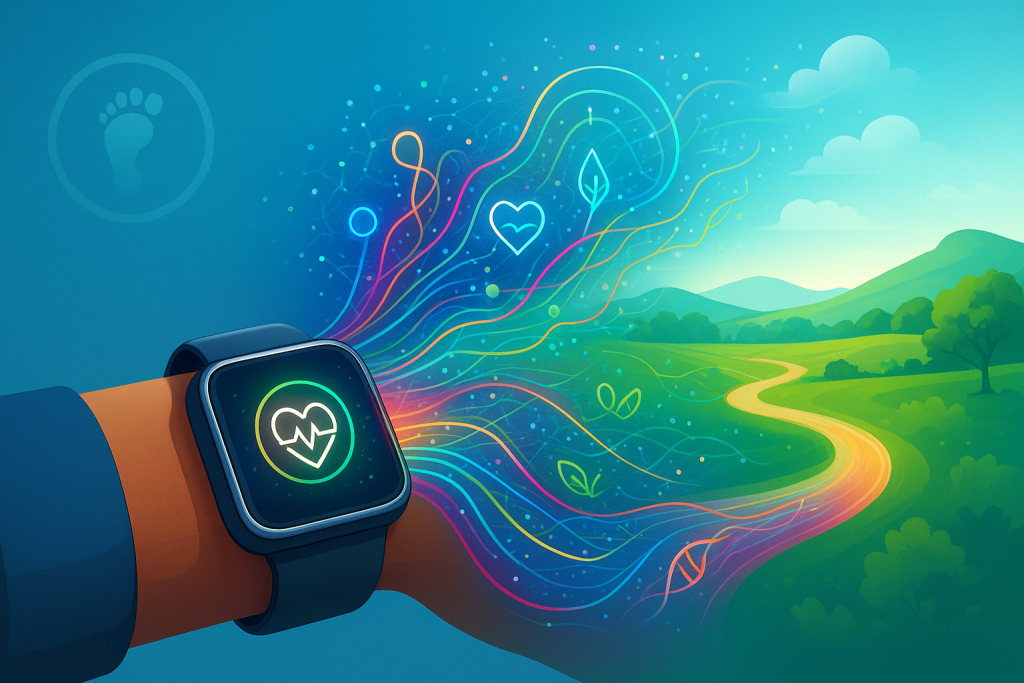
That “what if” is now our reality. We are witnessing a seismic shift from generalized fitness to personalized wellness—a model where technology doesn’t just track metrics, but interprets them through the lens of your individuality. At the heart of this revolution are two powerful allies: advanced wearables and artificial intelligence. They’re moving us from guessing to knowing, transforming everyday health from a chore into a finely-tuned, personal symphony.
From Pedometers to Personal Biomonitors: The Wearable Evolution
The journey started simply. The first mainstream wearables were glorified pedometers, focused on a single metric: steps. But the quest for personalized wellness demanded more. Today’s devices are sophisticated biotrackers, collecting a symphony of physiological data.
Modern sensors can continuously monitor:
- Heart Rate Variability (HRV): A profound indicator of stress, recovery, and nervous system balance, not just heart rhythm.
- Resting Heart Rate & Continuous ECG: Offering insights into cardiovascular fitness and even detecting potential anomalies like atrial fibrillation.
- Skin Temperature & Electrodermal Activity: Key markers for illness onset, stress responses, and menstrual cycle tracking.
- Blood Oxygen Saturation (SpO2): Critical for understanding sleep quality and respiratory health.
- Advanced Sleep Staging: Moving beyond duration to analyze the quality of light, deep, and REM sleep cycles.
This isn’t just more data; it’s a richer, multi-dimensional portrait of your daily life. A landmark Stanford study published in Nature highlights how data from wearables can detect physiological changes before obvious symptoms of illness appear. The device on your wrist is no longer just a tracker—it’s a personal biomonitor.
The AI Brain: Turning Raw Data into Personalized Insight
Data alone is overwhelming. This is where AI becomes the indispensable genius of personalized wellness. AI algorithms act as your personal data scientist, working behind the scenes to find meaning in the numbers.
How AI Powers True Personalization:
| What AI Does | How It Enables Personalized Wellness |
|---|---|
| Identifies Baselines | Learns your normal HRV, your typical sleep pattern, establishing a unique benchmark. |
| Discovers Correlations | Links a late meal to poor sleep scores or a stressful work meeting to a spike in resting heart rate. |
| Provides Contextual Nudges | Suggests winding down because your data shows you need more deep sleep tonight, not because of a generic rule. |
| Predicts & Prevents | Flags concerning trends, like a steady decline in HRV, suggesting you may be overtraining or under-recovering. |
AI moves us from reactive logging (“I slept poorly”) to proactive insight (“Your data suggests caffeine after 2 PM is disrupting your deep sleep”). Companies like WHOOP and Oura have built their entire value proposition on this AI-driven interpretation, offering a “Readiness Score” or a “Sleep Score” that synthesizes multiple data streams into a single, actionable piece of personal guidance.
The New Frontiers: Glucose, Stress, and Hyper-Personalized Nutrition
The cutting edge of personalized wellness is getting even more, well, personal. The latest technologies are diving into metabolic and biochemical health in real-time.
- Continuous Glucose Monitors (CGMs): Once tools primarily for diabetics, CGMs are now offering profound insights for the general population. By showing how your blood sugar responds to specific foods, exercise, and sleep, they enable a truly personalized nutrition plan. A food that causes a spike in one person may be neutral for another—CGMs reveal that unique picture.
- Quantified Stress Management: Devices like the Fitbit Sense or Amazon Halo use sensors like EDA to detect physical signs of stress. When paired with AI, they can prompt you to take a guided breathing session in the moment you need it most, creating a personalized stress-resilience feedback loop.
- The Integration Dream: The future lies in the seamless integration of these data streams. Imagine your wearable knowing your blood glucose is dropping, your HRV indicates high stress, and your calendar shows a big meeting—suggesting the perfect snack and a 5-minute mindfulness exercise to optimize your performance.
Navigating the Personal Data Paradox: Promise and Privacy
This hyper-personalization comes with critical questions. We are entrusting incredibly intimate data to devices and algorithms. A World Economic Forum report on data equity cautions that the benefits of health data must be balanced with robust governance and ethical frameworks.
The path forward requires:
- Transparency: Companies must clearly explain how data is used and who owns it.
- Security: Implementing bank-level encryption and security protocols is non-negotiable.
- Ethical AI: Ensuring algorithms are built to help, not manipulate, and are free from bias, as discussed by researchers at the AI Now Institute.
The goal is personalized wellness, not surveillance. Empowering users with ownership and clear value-for-data exchange is paramount for this revolution to earn and keep our trust.
Your Personalized Path Forward
The era of guessing is over. Personalized wellness, powered by wearables and AI, offers a future where health is not a destination defined by others, but a continuous, understood, and optimized journey of your own. It’s the shift from asking “Am I healthy?” to understanding “What does my health need today?”
These tools are not about fostering obsession with metrics, but about cultivating awareness. They provide a mirror to our bodies’ subtle languages, helping us make informed choices that resonate with our unique biology.
What’s your experience? Has a piece of data from your wearable ever led to a genuine “aha!” moment that changed your behavior? Share your story of personalized wellness in the comments below—let’s learn from each other’s journeys.